
What is a motherboard?
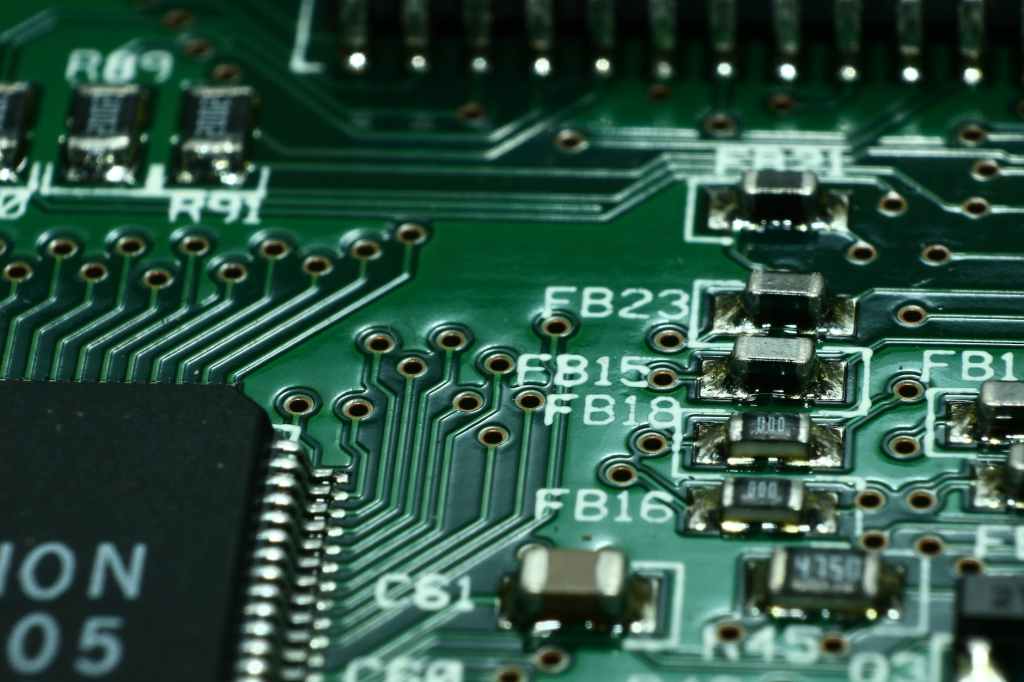
A motherboard, often referred to simply as a “mobo” or “mainboard,” is the central and primary circuit board in a computer. It is a crucial component that connects and interconnects various hardware components and peripherals to create a functional computer system. The motherboard serves as the foundation upon which the CPU (Central Processing Unit), RAM (Random Access Memory), storage devices, and other essential components are mounted and integrated. Here are the key functions and components of a typical motherboard:
- CPU Socket: The CPU socket is a specific slot on the motherboard designed to hold the computer’s central processor, or CPU. The CPU is often considered the “brain” of the computer and is responsible for executing instructions and performing calculations.
- RAM Slots: Motherboards come with slots for installing RAM modules. These slots allow for the installation of system memory (RAM), which is used to store data that the CPU is currently working on. The number of RAM slots and the supported RAM type (e.g., DDR4, DDR5) vary depending on the motherboard.
- Expansion Slots: Expansion slots, such as PCIe (Peripheral Component Interconnect Express) slots, are used for adding various expansion cards to the system, including graphics cards, sound cards, network cards, and more. These slots enable users to customize and upgrade their computers for specific tasks or requirements.
- Storage Connectors: Motherboards feature connectors for attaching storage devices, such as SATA ports for connecting SATA SSDs and HDDs, M.2 slots for attaching M.2 SSDs, or specialized connectors for high-speed storage interfaces like PCle.
- Power Connectors: The motherboard connects to the computer’s power supply unit (PSU) through several power connectors, including the main ATX power connector and supplementary connectors for CPU power (usually 4-pin or 8-pin).
- I/O (Input/Output) Ports: The rear I/O panel of the motherboard provides various ports for connecting external devices, such as USB ports, audio jacks, Ethernet ports, and video outputs (if the motherboard has integrated graphics).
- BIOS/UEFI Chip: The BIOS (Basic Input/Output System) or UEFI (Unified Extensible Firmware Interface) chip stores firmware that initializes the computer hardware during startup. It also contains settings and configurations for the motherboard and other system components.
- Chipset: The chipset is a collection of integrated circuits on the motherboard that manages data flow between the CPU, memory, storage, and other connected devices. It plays a crucial role in the overall system’s performance and functionality.
- Clock Generator: The motherboard includes a clock generator that regulates the timing of various operations within the computer. It ensures that different components of the system operate in synchronization.
Overall, the motherboard acts as the central nervous system of a computer, coordinating the interactions between different hardware components and facilitating the communication necessary for the computer to function properly. It plays a pivotal role in determining system compatibility, performance, and expandability. Different motherboards support different CPU types, RAM capacities, and peripheral configurations.
 Gaming PC Advice