
Best Virtual Reality Headsets
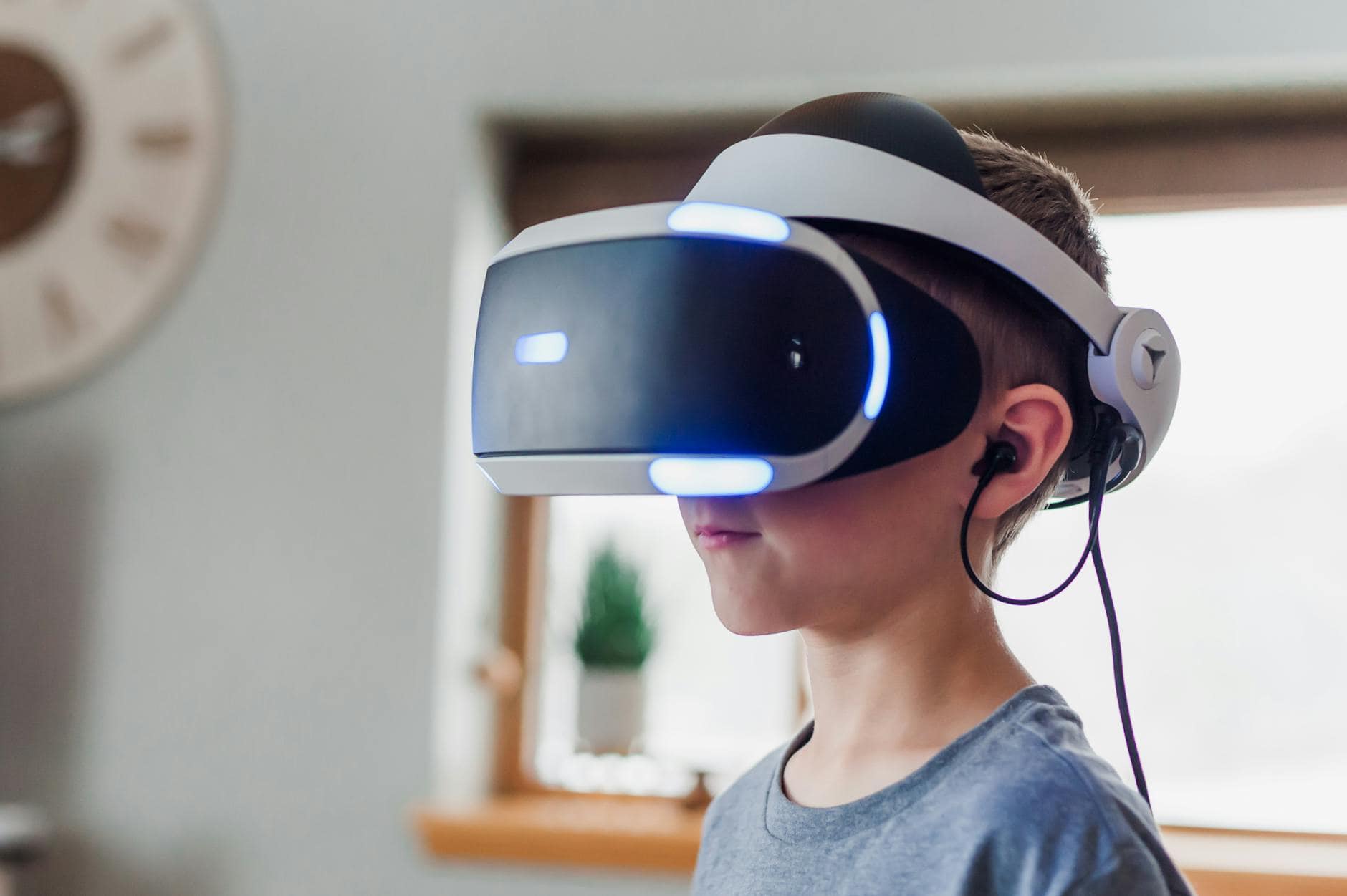
If you want to experience virtual reality (VR) gaming and are set on purchasing a VR headset, there are a few things to consider first:
Platform Compatibility: First of all make sure that the VR headset you are interested in is PC compatible. VR headset can be PC-based, console-based, or standalone.
PC-based VR headsets (PCVR) such as the Meta Quest and HTC Vive series offer high-end experiences but require a powerful gaming PC. So, make sure your PC can handle the VR headset before you make a purchase (check the VR headset minimum system requirements).
Standalone VR headsets such as the Meta Quest series offer a wireless, all-in-one experience, no PC or console needed, but of course performance will be suboptimal with graphically demanding games. Console VR headsets such as the PlayStation VR won’t work on a PC.
Display resolution: Consider the display resolution, higher resolutions provide a more immersive experience. Typically resolutions are provided in numbers of pixels (width x height) per eye. For example, 1440×1600 resolution (per eye) is higher than an FHD computer monitor, but a resolution of 2448×2448 will provide much crispier visuals.
Refresh rate: Refresh rate refers to how many times per second a display updates the onscreen image. Good gaming monitors aim for a refresh rate of at least 144 Hz, but VR headsets typically offer refresh rates in the 90-120 Hz range. Higher refresh rates lead to smoother motion and reduced motion blur in fast-paced video games.
Field of View (FoV): A wider FoV enhances immersion. Ideally look for headsets with a horizontal FoV of at least 100 degrees.
Tracking and Controllers: Accurate and responsive tracking is crucial for a good VR experience. There are two types of tracking systems: Inside-out tracking and outside-in tracking. Inside-out tracking relies on tracking sensors and cameras built directly into the VR headset itself to monitor head movements. Outside-in tracking instead relies on external sensors and cameras and so requires more hardware (base stations).
Audio: Most modern VR headsets aim to provide high-quality audio, but the level of 3D spatial audio can vary. 3D audio is a technology that simulates sound in three dimensions, creating a sense of depth and directionality. It allows you to perceive sounds as if they are coming from specific locations in the virtual environment, enhancing immersion.
The word “spatial” indicates that audio adapts to changes in the listener’s perspective and movement. For example, if you turn your head in a virtual environment, the spatial audio system will update the sound sources’ positions accordingly to match your new viewpoint.
Some VR headsets come with built-in headphones or speakers designed to provide high-quality 3D spatial audio. Other VR headsets provide audio output options for users who prefer to use their own high-quality headphones or speakers.
Comfort and Ergonomics: VR headsets vary in comfort and adjustability. Try to find one that is not too heavy and that fits comfortably on your head for extended use.
Content Library: Not all games are designed to work with VR and some are exclusive to specific VR headsets. The availability of games can obviously greatly affect your VR experience. For example, Meta Quest has its own exclusive titles, while the SteamVR platform is open to various VR headsets, but some games may be optimized or officially supported only for certain headsets.
Price: VR headsets range from affordable to premium (see selection of models below). Determine your budget and choose accordingly.
Some popular VR headsets designed to work with a PC are listed below. The sets are ordered by increasing price (prices are in US$ and may vary depending on current promotions and availability). Please make sure that you also check our regularly updated News & Deals section for limited-time offers.
Meta Quest 3S
($399.00 on Amazon.com)
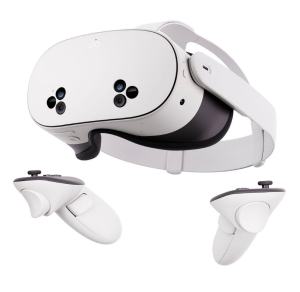
- Platform: standalone, PC
- Storage: 256 GB
- Connection type: wireless headset and controllers
- Display resolution: 1832×1920 per eye
- Refresh rate: up to 120 Hz
- FoV: 96º
- Controllers and tracking: Touch Plus controllers, inside-out tracking
- Audio: built-in speakers and microphone
- Weight: 18.1 oz (514 g)
- Misc: up to 2.5h battery life
The Meta Quest 3S is a budget-friendly version of the older and more expensive Meta Quest 3, although its greater affordability comes at the cost of lower resolution, a narrower field of view, and half the storage space. However, overall the Meta Quest 3S still offers a great VR experience. If you are not interested in storing your games on the headset (i.e. you mostly play connected to a PC), there is also an even more affordable version with only 128 GB of storage space.
Meta Quest 3
($499.99 on Amazon.com)
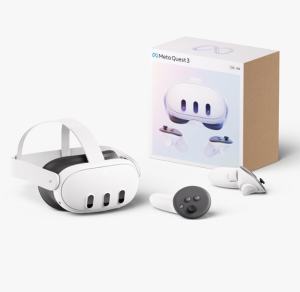
- Platform: standalone, PC
- Storage: 512 GB
- Connection type: wireless headset and controllers
- Display resolution: 2064×2208 per eye
- Refresh rate: up to 120 Hz
- FoV: 110º
- Controllers and tracking: Touch Plus controllers, inside-out tracking
- Audio: built-in speakers and microphone
- Weight: 18.2 oz (515 g)
- Misc: up to 2.2h battery life
The Meta Quest 3 can be used as a standalone VR headset, so it comes with its own 512 GB of storage space. This model used to also have a 128 GB version, but that has been discontinued, likely as a result of the bulky install size required by some of the latest games.
Varjo Aero
($990.00 on Varjo.com)
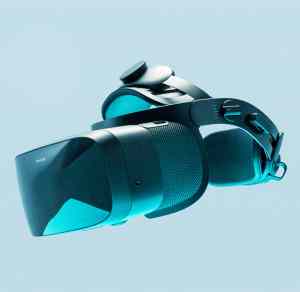
- Platform: PC
- Storage: N/A
- Connection type: wired headset
- Display resolution: 2880×2720 per eye
- Refresh rate: 90Hz
- FoV: 115º
- Controllers and tracking: controllers and bases sold separately, outside-in tracking
- Audio: removable headphones with microphone
- Weight: 25.3 oz (717 g)
Varjo offers Steam VR headsets with good displays and comfort. Keep in mind that the VR headset requires a SteamVR™ tracking system sold separately (4x SteamVR™ 2.0 or 1.0 base stations). SteamVR™ 2.0 or 1.0 controllers also need to be purchased separately.
HTC Vive Pro 2
($1399.00 on Vive.com)

- Platform: PC
- Storage: N/A
- Connection type: wired headset, wireless controllers
- Display resolution: 2448×2448 per eye
- Refresh rate: up to 120 Hz
- FoV: 120º
- Controllers and tracking: VIVE controllers + SteamVR™ Base Stations (outside-in tracking)
- Audio: removable headphones and built-in microphone
- Weight: 30 oz (850 g)
This VR headset can also be used in wireless mode by adding a wireless adapter at an extra cost, but keep in mind that wireless mode only supports a refresh rate of 90 Hz.
Valve Index
($1416.98 on Amazon.com)
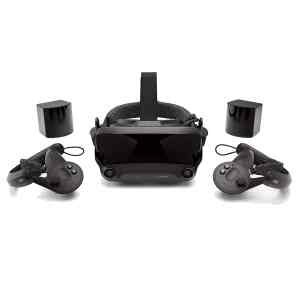
- Platform: PC
- Storage: N/A
- Connection type: wired headset, wireless controllers
- Display resolution: 1440×1600 per eye
- Refresh rate: 120 Hz
- FoV: 130º
- Controllers and tracking: Valve Index controllers + SteamVR™ Base Stations (outside-in tracking)
- Audio: built-in speakers and dual microphone
- Weight: 28.5 oz (808 g)
The Valve Index is known for its high-end PC VR experience and is often praised for its tracking and controllers. This VR kit can also be purchased directly from the Steam store.
Pimax Crystal
($1799.00 on Amazon.com)
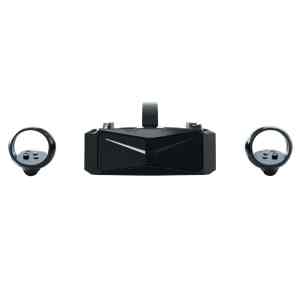
- Platform: standalone, PC
- Storage: 256 GB
- Connection type: wireless headset and controllers
- Display resolution: 2880×2880 per eye
- Refresh rate: up to 120Hz
- FoV: 125º
- Controllers and tracking: Pimax Crystal controllers, inside-out tracking
- Audio: built-in speakers and microphone
- Weight: 9 oz (256 g)
- Misc: up to 6h battery life
Pimax headsets are known for their wide field of view, which can provide an even more immersive experience. Because of 4 external depth-of-field cameras on the headset, base stations are not required. Be aware of the fact that this headset is not compatible with the NVIDIA GeForce RTX 3090 Ti for some odd reason.
 Gaming PC Advice