
AMD Unleashes the Ryzen 9 9950X3D and 9900X3D—Are They the Best Gaming CPUs of 2025?
March 23, 2024 – Late last year, AMD’s released the Ryzen 7 9800X3D, a desktop processor dedicated to gaming, leading the charge of the new 9000 series CPUs with 3D V-Cache technology.
The launch of the Ryzen 7 9800X3D was an incredible success, with gamers welcoming it as a noticeable improvement over its already excellent predecessor, the Ryzen 7 7800X3D.
As discussed in our article dedicated to the Ryzen 7 9800X3D, this CPU quickly established itself as the top desktop CPU for gaming. However, it was outperformed by other CPUs, such as the Intel Core i9-14900K or the AMD Ryzen 9 9950X, in creative tasks.
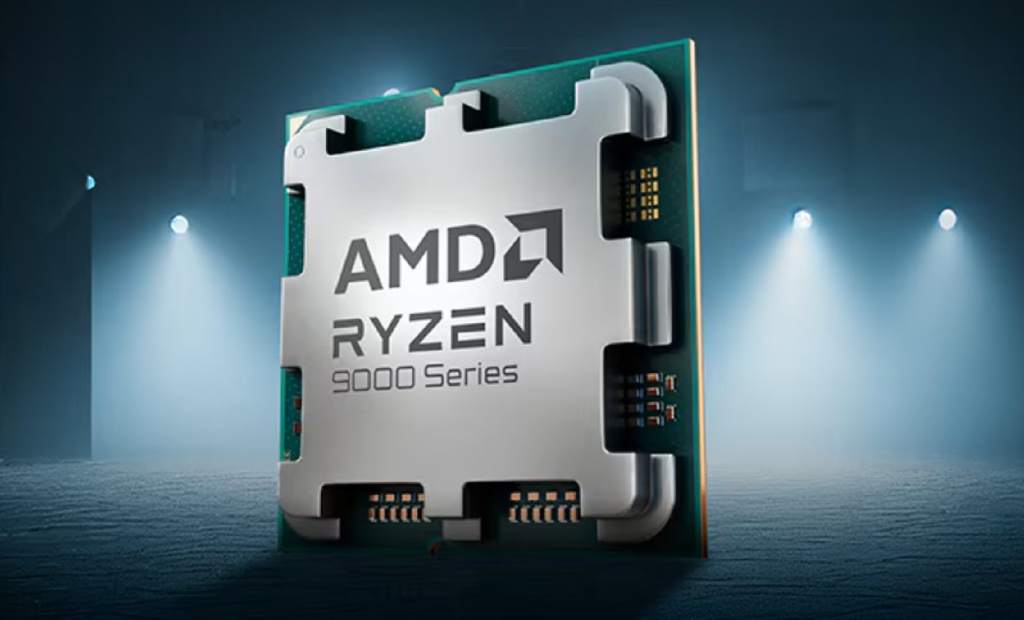
AMD is now addressing that with the launch of its two new desktop processors, the Ryzen 9 9950X3D and the Ryzen 9 9900X3D, which promise to deliver outstanding performance not only in gaming but also in content creation.
So, let’s examine the main tech specs of these two new processors from AMD and compare them to the Ryzen 7 9800X3D, their X3D predecessors from the 7000 series, and Intel’s top competitors.
| CPU | Cores/ Threads | Base Speed* | Max Speed | Cache (L2 + L3) | TDP | Price** |
| AMD Ryzen 9 9950X3D | 16/32 | 4.3 GHz | 5.7 GHz | 144 Mb | 170 W | $699 |
| AMD Ryzen 9 9900X3D | 12/24 | 4.4 GHz | 5.5 GHz | 140 Mb | 120 W | $599 |
| AMD Ryzen 7 9800X3D | 8/16 | 4.7 GHz | 5.2 GHz | 104 Mb | 120 W | $479 |
| AMD Ryzen 9 7950X3D | 16/32 | 4.2 GHz | 5.7 GHz | 144 Mb | 120 W | $699 |
| AMD Ryzen 9 7900X3D | 12/24 | 4.4 GHz | 5.6 GHz | 140 Mb | 120 W | $599 |
| AMD Ryzen 7 7800X3D | 8/16 | 4.2 GHz | 5.0 GHz | 104 Mb | 120 W | $449 |
| Intel Core Ultra 9 285K | 24/24 | 3.7 GHz | 5.7 GHz | 76 Mb | 250 W | $589 |
| Intel Core i9-14900KS | 24/32 | 3.2 GHz | 6.2 GHz | 68 Mb | 253 W | $689 |
| Intel Core i9-14900K | 24/32 | 3.2 GHz | 6.0 GHz | 68 Mb | 253 W | $589 |
As seen in the table above, the AMD Ryzen 9 9950X3D has experienced a noticeable increase in maximum power consumption, while other CPUs have remained unchanged in this regard.
Both the AMD Ryzen 9 9950X3D and the AMD Ryzen 7 9800X3D have seen a slight increase in base and boost clock frequencies compared to their 7000 Series predecessors, while the AMD Ryzen 9 9900X3D has seen a small decrease.
So, has little changed? Not exactly. In fact, the new 9000 series GPUs are based on the much faster and more efficient Zen 5 architecture, along with improvements in their 3D vertical-stacked cache, or 3D V-Cache technology. In the new design, the 3D V-Cache die is stacked below the CPU complex die (CCD), improving cooling efficiency and consequently allowing for higher base frequencies and overall performance.
This new architectural design has already led to the dominance of the AMD Ryzen 7 9800X3D in gaming tasks, giving it an edge even over its already powerful predecessor, the AMD Ryzen 7 7800X3D, which was based on the less efficient Zen 4 architecture.
The much larger cache sizes of AMD’s CPUs compared to their Intel’s competitors indicate better gaming perfomance, and the greater power efficiency is the cherry on top.
In terms of price, the new CPUs from AMD are all very competitively priced compared to their 7000 Series predecessors and Intel’s top competition (assuming that you can find retailers selling them at the manufacturer’s suggested retail price or MSRP).
As we discussed in our previous article about the AMD Ryzen 7 9800X3D, this CPU was the top gaming processor late last year, surpassing by a wide margin all previously released AMD and Intel processors.
For gamers, the main question now is: can the two new AMD 9000 Series entries outperform the Ryzen 7 9800X3D in gaming? In other words, did AMD just outdo itself? Let’s find out below.
Benchmarks
Ryzen 9 9950X3D vs Ryzen 7 9800X3D
NanoReview.net compared the overall performance of the Ryzen 9 9950X3D against that of the Ryzen 7 9800X3D and found that the former is slightly superior in single-threaded (single-core) tasks and much superior in multi-core performance. The two CPUs are about equivalent in power efficiency and integrated GPU (iGPU) capabilities.
Since single-threaded performance is an indicator of gaming performance, while multi-core performance is an indicator of performance in creative tasks, these results support AMD’s statement that the Ryzen 9 9950X3D is designed to deliver excellent performance in both gaming and content creation.
Overall, NanoReview.net considers the Ryzen 9 9950X3D a superior CPU, thanks to its greater versatility and excellent performance across different types of tasks. Its edge over the Ryzen 7 9800X3D mainly derives from the higher core count, higher boost frequency (Turbo Speed), and the larger cache size.
Similar results are echoed by PassMark, where the Ryzen 9 9950X3D is again found to be largely superior to the Ryzen 7 9800X3D in overall performance. However, when it comes to games specifically, the crown goes to the Ryzen 7 9800X3D, although the Ryzen 9 9950X3D is a close second.
Testing Games compared the performance of the Ryzen 9 9950X3D and the Ryzen 7 9800X3D in a series of graphically demanding games at high settings and 1080p resolution. Their results show that the two CPUs are indeed very closely matched.
The Ryzen 9 9950X3D is pushing frames per second (FPS) slightly higher than the Ryzen 7 9800X3D in most games, but only by a couple of frames, while the Ryzen 7 9800X3D performs better in Marvel’s Spider-Man 2 (+9% FPS), Kingdom Come: Deliverance II (+8% FPS), and Ghost of Tsushima (+6% FPS).
If we compare average FPS values across all games tested, the Ryzen 7 9800X3D has only a very small and barely noticeable edge over the Ryzen 9 9950X3D (+0.5% FPS).
Ryzen 9 9900X3D vs Ryzen 7 9800X3D
NanoReview.net found that the Ryzen 9 9900X3D and the Ryzen 7 9800X3D perform almost equally in single-threaded tasks, while the former is much better at multi-core activities. The two CPUs show the same power efficiency, but the Ryzen 9 9900X3D earns a higher overall score due to its greater core count, boost frequency, and larger cache size.
PassMark confirms these findings, but in gaming the Ryzen 7 9800X3D significantly outperforms the Ryzen 9 9900X3D. The latter also ranks below the Ryzen 9 9950X3D, all AMD 7000X3D Series CPUs and Intel’s Core Ultra 9 285K but does outperform the Intel Core i9-14900KS and i9-14900K.
Hardware for Gamers tested the Ryzen 9 9900X3D and the Ryzen 7 9800X3D at 1080p and 1440p resolutions. At 1080p, the Ryzen 7 9800X3D led in Total War: Warhammer 3 (+19% FPS), Baldur’s Gate 3 (+13% FPS), and Cyberpunk 2077 (+11% FPS), averaging a +7% FPS advantage across all games tested. At 1440p, the difference narrowed to +4% FPS, as the graphics card workload increased.
Conclusions
Regarding the Ryzen 9 9950X3D, this new AMD CPU delivers excellent performance in both gaming and content creation. In games, it closely rivals the current king of gaming CPUs, the Ryzen 7 9800X3D, which was released late last year. In content creation and other tasks, it is one of the best desktop CPUs currently available.
So, if you are interested in both gaming and content creation, then the Ryzen 9 9950X3D is definitely your best pick. However, if gaming is your main focus, then you should opt for the much cheaper Ryzen 7 9800X3D.
The Ryzen 9 9900X3D, while still a good mid-range multitasking CPU, is surpassed by several other AMD and Intel CPUs in both gaming and creative tasks. In gaming specifically, its performance lags far behind that of the Ryzen 7 9800X3D despite its higher MSRP, making it a poor choice for those primarily looking to play games.
In conclusion, the Ryzen 9 9900X3D is a little underwhelming as a new addition, both in gaming and content creation. However, the Ryzen 9 9950X3D definitely hits the mark. While it is still slightly outperfomed in gaming by the Ryzen 7 9800X3D, the difference is marginal, and it stands as one of the best overall performers in the desktop CPU market today.
 Gaming PC Advice